Taking Charge: A New EV Training Program Launches for the Formerly Incarcerated Community
By Emma Newman
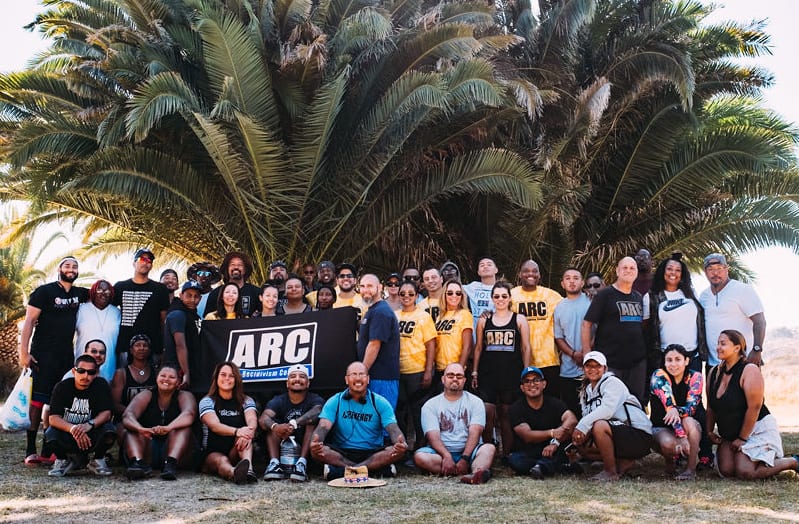
On August 4, nine formerly incarcerated people gathered, with their friends and family, to mark an enormous milestone. After twelve weeks of studying, attending classes and training on cars, they had finally become trained Electric Vehicle Maintenance Technicians.
The graduation celebrated the first cohort in a new program that trains formerly incarcerated people the basics of operating, maintaining, trouble-shooting and commissioning electric vehicles. The program served as a collaboration between the Anti-Recidivism Coalition (ARC) and two electric vehicle companies, InCharge and LogiTech. In the program, participants are able to choose between a technical and non-technical track and receive a stipend to fund their time.
Program manager Laura Rivas originally conceptualized the program with the founder of InCharge and LogiTech, Cameron Funk.
“I think it’s critically important for people in these communities to realize the harmful effects of diesel emissions, and, more importantly, realize that they can play a part in improving their communities,” Rivas said. “ARC was a perfect entity, because these are folks who are really dedicated to now improving their communities, … to really taking advantage of these second chances and of this re-entry process and figuring out how they can contribute more positively to their communities.”
Occasionally, Rivas had to address the apprehensiveness of some companies to hire people with felony records. However, with letters of support from employers in the electric vehicle industry, she ultimately found most companies to be open to the idea of hiring ARC members.
“I had to reassure people that these were safe, certified, trained folks,” Rivas explained. “Not everyone approaches this in as open-minded a way as some of us do, but for the most part, I’d say I was really pleased with people’s response.”
And at the end of the program, cohort members had irreplaceable training and opportunities for future employment.
“I think being able to learn a skill, a specialized skill, in a field that’s growing exponentially, and that’s going to continue to grow, it opens up like such a wide world for us to be able to do that, and not only that, make a sustainable living,” one of the program graduates, Christopher Games, said. “What was a challenge for me getting out was being able to get a job that I can make a decent… pay, where I can provide for myself and for my family.”
Games made the most of this opportunity, and at the end of the program, he was named one of three exemplary students and made a speech at his graduation. In his speech, he deemed the opportunity to participate in the program as an honor.
“I believe that programs such as this are crucial to my type of community; individuals that have made mistakes in their past but have changed into productive members of society and are eager to learn new things that they may otherwise have not,” said Games.“This program has been such a great experience, and I was not treated like my past would have suggested for me to be treated.”
For Rivas, having the opportunity to improve the lives of people like Games was the best part of the program.
“Taking on this sort of side project, if you will, I found to be incredibly rewarding because it reminded me that while day to day, my job is business development and is effectively helping our team to sell and install chargers, there’s something more happening beyond just hardware, right?” Rivas said. “Watching them all grow and learn and maybe stumble but recover just reminds me how important it is that people understand the growth possibilities in this industry.”